

The annex meets the requirements for Environmental Construction Gold. Miljöbyggnad is a certification system for creating environmentally sustainable buildings. It is based on Swedish building and authority regulations as well as Swedish construction practice. Environmental building is a certificate of important qualities of a building in terms of energy, indoor environment and materials and is used for newly produced and existing buildings regardless of size. In Environmental Construction, a building can achieve the bronze, silver or gold rating. Behind the certification stands the non-profit association Sweden Green Building Council (SGBC).
Being a tenant in a certified building means a responsibility in the use of the premises and the building to create the smallest possible environmental impact. In order for the property to be able to maintain the certification, it is important that you as a tenant know what applies.
If you have questions, you are welcome to contact your administrator at Akademiska Hus.
Campus Lund LTH
Annexet
Quick facts
- Year Built: 1964
- Architect: Klas Anshelm
- Address: Sölvegatan 20B
- Facility ID: M0018102
- Property Designation: Helgonagården 6:16
General information
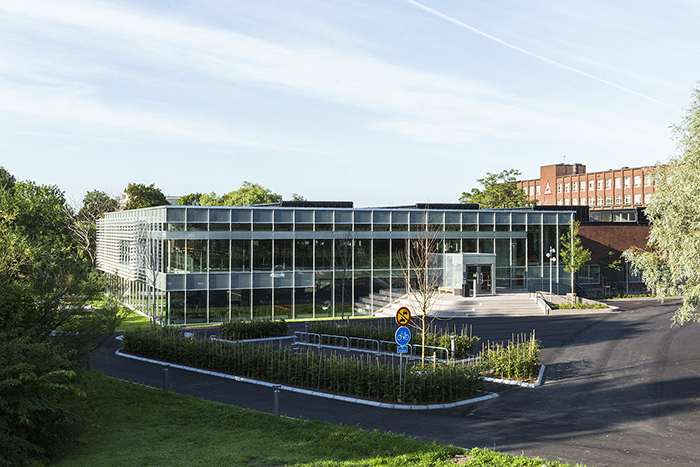
The annex in Lund was formerly known as the Matteannex and was mainly used for lectures and exam writing, which led to it being perceived as a bit angsty. In connection with the development of Lund's campus plan, it was decided to breathe new life into the building, give it a more versatile character and connect it with the rest of the campus. It was also when it was decided to change the name to the more general "Annex".
They have chosen to keep the basic structure of the house, but supplement it with a 650 square meter glazed extension. It lets in daylight and contains important entrances to the north and north-west, which thus gives the house a new facade towards Kunskapsstråket. In the extension there are now meeting areas and more than 100 study places with a view of the LTH park and the lakes.
In addition to the obvious changes with the expansion, great focus was also placed on improving the indoor climate by, for example, building a new fan room to remedy ventilation problems and a new lighting system for both reduced energy consumption and improved well-being and learning ability.
With the remodeling and expansion of the Annex, it has now become a natural part of Lund University and a meeting point for students, teachers, researchers and staff. It has also meant an increase in study places, something that has been in demand by the students at Lund University.